
Refine by
Satellite Data Articles & Analysis
303 news found
The project integrates artificial intelligence and machine learning techniques with multiple information sources (Multi Source Data Together), such as weather data, runoff, precipitation, and river flows entering Tampa Bay. Additionally, the system incorporates a wide network of sensors and data sources including satellite ...

By 2030, global demand for water will outgrow supply by 40%. Global commitments to water are more critical than ever as progress on water security remains fragmented. As the 30th UN Climate Change Conference of the Parties (COP30) approaches, we take stock of how global water policy has evolved to better understand both the successes and shortcomings of commitments to ...
Africa’s water future depends on better data and smarter tools. Yet, the lack of investments to use satellite data and technology to manage the continents’ water resources remains a challenge. ...
At Cairo Water Week (CWW) 2025, held from October 12-16, science, policy and innovation came together to confront one of the Middle East and North Africa’s (MENA) most pressing challenges: water scarcity. This year’s theme - Innovative Solutions for Climate Resilience and Water Sustainability - carried particular weight in the world’s most water-scarce region. Leading ten ...
It was an honor for LG Sonic to be invited to the 1st Technical-Scientific Meeting of Water and Sanitation Utilities of the Americas and the Caribbean, an event hosted in Lima, Peru, by SEDAPAL (the Water and Sanitation Service of Lima) in collaboration with AIDIS (the Inter-American Association of Sanitary and Environmental Engineering). This important gathering brought together leading experts, ...
The International Water Management Institute (IWMI) and Microsoft have joined forces to create an AI agent for the Limpopo River Basin in southern Africa. This AI agent, named ‘Limpopo Water Copilot’, draws from real data on river systems to deliver reliable and scientific insights for water managers in the region. The Limpopo Water Copilot is the first real-world application of IWMI ...
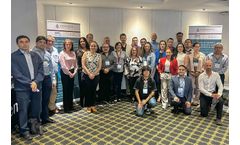
They discussed how the presidential vision for water security could be achieved using AI, Earth Observation data and data analytics. Among the most pressing challenges, Rodriguez pointed out: monitoring the use and availability of water, monitoring the impact of technification of 17 irrigation districts, river sanitation and improving water quality in ...
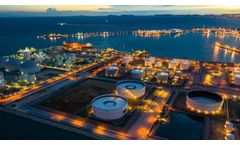
Methane emissions from fossil fuels remain at stubbornly high levels, according to the IEA’s latest global tracking update, which notes that efforts to bolster data collection and monitor methane leaks are making progress. The Global Methane Tracker 2025, out this week, presents the IEA’s latest sector-wide emissions estimates, based on the most recent data from ...

TELEO’s main objective is to demonstrate the feasibility and efficiency of laser links between a geostationary satellite and a ground station. With this technology, data can be transmitted much faster than through traditional radio systems. ...
In the face of climate change, the need for accurate, comprehensive information has never been more critical. The integration of Artificial Intelligence (AI), Internet of Things (IoT) devices, and traditional on-the-ground measurements is advancing how we understand and manage water resources and respond to extreme events. As we move into 2025 and beyond, these three trends will play a ...
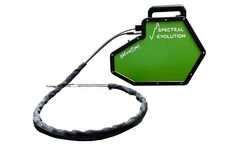
Eliminating the uncertainties usually associated with the calculation of the field of view and the targeting of the samples. Besides spectral data, the instrument also provides a real-time video feed of the actual field of view of the fiber optic or lens attachment. ...
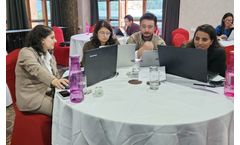
Participants from Bhutan, Bangladesh, and Nepal received hands-on training on the use of GIS and Remote Sensing during a two-day workshop as part of the South Asia Built Water Storage project. Bhutan’s Department of Water organized the event with technical support from the International Water Management Institute (IWMI) and in partnership with GWP South Asia. The workshop took place from ...
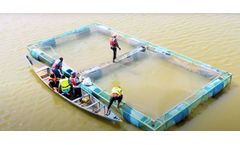
In Ghana’s North-East Region, an innovative aquaculture pilot initiative is transforming local communities by creating new livelihood opportunities. Led by the International Water Management Institute (IWMI) in partnership with the Council for Scientific and Industrial Research – Water Research Institute (CSIR-WRI) and the Fisheries Commission (FC) of Ghana, this initiative is taking ...
The International Water Management Institute (IWMI) and the Saudi Irrigation Organization (SIO) extended cooperation on irrigation and wastewater use in the MENA region under the e-ReWater project. The Director General of IWMI, Mark Smith, signed a supplement to the existing Memorandum of Understanding between IWMI and SIO on the sidelines of the 10th World Water Forum in ...
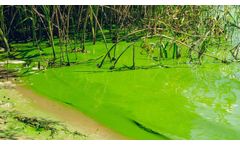
Monitoring these parameters allows scientists to see the impact of blooms and evaluate the effectiveness of algae-management strategies and treatments. Additionally, data on these parameters can be transmitted via the cellular telemetry device VuLink to the cloud-based data-hosting platform HydroVu. Regular data transmission informs timely ...
The International Water Management Institute’s (IWMI) flood situation maps, which use Sentinel-1 satellite data, illustrate the situation in Nairobi, Kiambu, and Machakos. ...

The webinar, titled “What Could be Hiding in Your Data? Using Generative AI to Uncover Correlations, Associations, and Insights in Well-Structured Datasets” promises to deliver critical insights into the practical applications of AI in environmental data management. ...
The grant will support researchers at IWMI as they develop e-ReWater, a platform powered by artificial intelligence and earth observation data which uses remote sensing technologies to monitor land, seas and the atmosphere. With help from satellites, it will help estimate the availability of new water resources and improve water reuse. ...

This method consists of robust global carbon model which incorporates satellite data, existing proprietary soil measurements (n>250,000), and advanced deep learning algorithms. ...
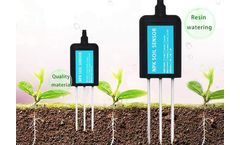
These sensors provide real-time or periodic data, enabling farmers to gain insights into soil health, nutrient availability, and water requirements. ...