
Refine by
Satellite Data Articles & Analysis
170 articles found
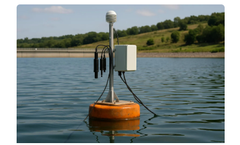
Unlike grab sampling, which involves a site visit, sample collection, and lab analysis, real-time systems employ in-situ sensors that measure conditions every 15 minutes to one hour and report data via cellular or satellite connection. The distinction matters. Grab sampling provides a snapshot at a single moment, whereas real-time monitoring yields a continuous ...

CADAIR’s GC-BLOCK Methane Cogeneration System is designed for treatment of methane streams below 8%, including ventilation air methane below 1%. Based on project operating data, the system has demonstrated methane destruction efficiency above 99% under specified operating conditions. ...
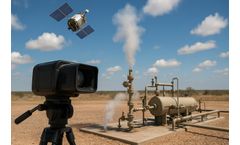
The burden of proof has shifted toward demonstrating non-emission or lower emission levels through empirical data. The Satellite Revolution and the EPA AI Enforcement Nexus Satellites employing SWIR spectroscopy identify plumes over extensive areas, enabling rapid, large-scale detection. ...
ByOPGAL
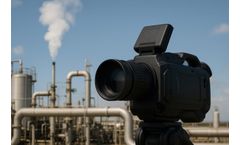
A missed leak can trigger a Super Emitter event via third-party satellite data, resulting in fines and reputational risk. The modern professional functions as a Thermography Compliance Officer, requiring knowledge of thermodynamics, gas physics, and hydrocarbon spectral signatures.OGI Certification: The Foundation of Regulatory ValidityUnder the new EPA Appendix ...
ByOPGAL

EPA AI and the Digital Enforcement Era The enforcement paradigm shifts to High-Tech Enforcement leveraging EPA AI and satellite data fusion. The agency integrates MethaneSAT, Carbon Mapper, and GHGSat data to identify plumes and cross-reference with operator filings. Automated notices of violation can be generated when ...
ByOPGAL
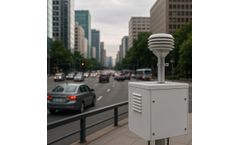
Urban planning increasingly treats air quality as an infrastructure input, leveraging multi-source data to reduce exposure, bolster resilience, and guide investment in healthier, more equitable cities.Key data types and their valuePollutant concentration data: monitoring commonly tracked pollutants include PM2.5, PM10, NO2, O3, SO2, and CO. PM2.5 ...
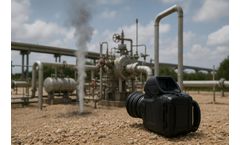
The introduction of EPA OOOOb for new, modified, and reconstructed sources and OOOOc for existing sources represents a 400% increase in the regulated infrastructure and data collection burden.The “Super Emitter” Response Program SERPThe EPA has authorized certified third parties to identify large methane releases using satellite data, aerial ...
ByOPGAL

The blog reviews how plants interact with pollution, which pollutants they affect, limitations of plants’ role, and how associated monitoring data is used to assess the effects of green initiatives on air-quality benefit claims. ...
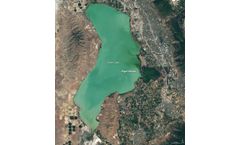
Introduction When people talk about water quality, they often focus on clarity or colour, but lake nutrients quietly shape almost everything that happens below the surface. A modest increase in nutrient loading can be the difference between a clear, oxygen-rich reservoir and one that drifts into chronic eutrophication with recurring algal blooms. For drinking water managers, understanding lake ...

However, advances in satellite technology have recently enabled nationwide monitoring, providing real-time data on particulate matter (PM 2.5). ...
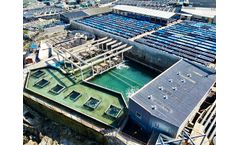
“We wanted to be able to look at our data at two in the morning,” Halse says. Abagold also has satellites that survey ocean conditions from above, but the satellites’ effectiveness is limited by weather patterns. ...

The capability of Sentinel-5p foraerosol monitoringis currently not used to its full potential. However, satellite observations in the spectral range from approximately 340 to 400 nm are known to have unique sensitivity to elevation and absorption of tropospheric aerosols. Traditionally, this sensitivity is used in many ozone monitoring instruments such as TOMS, GOME-1, SCIAMACHY, OMI and GOME-2 ...
The current project intends to use the heritage of the CAWA project as well as the recent advancements realized within the GRASP-Open software package to establish and extend the concept for generating synergy MERIS+AATSR ...
The 3DREAMS project presents the concept of a 3D radiative Digital Twin Earth (DTE) and how it can be used to understand the effects of surface heterogeneities on aerosol retrieval from multi-angular observations. A series of realistic scenes will be generated and used by the Eradiate radiative transfer (RT) model for the simulation of satellite observations. The impact of various types of ...
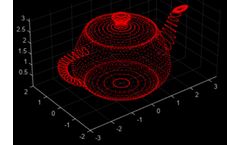
Suppose the LiDAR system is used without satellites in the so-called offline mode. The data is collected in a local coordinate system, and navigation is carried out using SLAM algorithms [7]. ...

Transforming Weather Water data into value-added Information services for sustainable Growth in Africa (TWIGA), is a four-year collaborative project funded under the EU Horizon ...

In the rapidly evolving water treatment industry, embracing digital transformation is crucial for improving operations, reducing risks, and making informed decisions. At LG Sonic, we are at the forefront of this revolution with our cutting-edge Digital Twin technology for surface water management. By leveraging real-time data collection, advanced water quality software, and seamless SCADA ...

By utilizing space research and orbiting satellites, we may gain a detailed picture of the toxins in our atmosphere. ...
For instance, ground-based monitoring stations, satellite-based monitoring systems, and low-cost sensors exist. These technologies, among others, provide real-time, accurate data on air quality, allowing for timely and effective responses to air pollution. ...

These sources can vary widely, including: Global Navigation Satellite Systems (GNSS): Provides absolute position data, critical for correcting the drift in inertial measurements over time. ...