
Soil Nutrient Cycle Articles & Analysis
22 news found
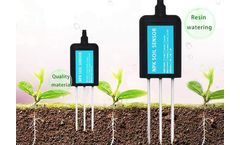
The Role of Soil Sensor Technology: Soil sensor technology allows farmers to measure and monitor various crucial parameters in the soil, including moisture content, temperature, nutrient levels, and pH. ...

Its ability to improve soil structure, water retention, and nutrient availability translates to higher crop yields and healthier ecosystems, presenting a compelling case for sustainable agriculture. ...

Tahir, Sven-Erik Svensson, and David Hansson investigated different orchard management systems in an organic apple orchard adapted to a cool climate, and evaluated the systems' effects on weed management, soil nutrient content, and soil physical conditions. The study also determined how each management system affected apple yield, quality, and ...

The answer to all these urgent issues could rest in the soil. Soil is vital to supporting food production as well as the filtering of water consumed by humans and plants. In addition, soil cycles and stores nutrients which are key to supporting life, as well as holding water to alleviate the stresses of both ...

The drying of soils under global warming could disrupt the balance of nutrients in large areas of the Earth’s land surface, according to new research. ...

Organic matter is important for soil health and crop productivity. While an indicator of soil quality, a lot of organic matter is in extremely stable forms, and the nutrients in such forms are difficult for plants to use. ...
Previous research indicates that both approaches have the potential to enhance: 1.) biodiversity, 2.) agricultural production and 3.) other ecosystem services, such as nutrient cycling and reduced soil erosion. Land sharing, or the promotion of environmentally-friendly farming, can provide these triple benefits within the farmed field as well as ...
The SSSA Consulting Soil Scientists Division also encourages soil science graduates to pursue a career in the field of professional consulting soil science to meet the various public needs and practical applications of this science. ...
Deirdre Griffin is a senior at the University of Maryland majoring in environmental science and policy with a concentration in environment and agriculture and a minor in soil science. Her studies focus on nutrient cycling in various cropping systems. Griffin is a member of UMD’s Soil Judging team. She plans to attend ...
Winter cover crops are an important component of nutrient cycling, soil cover and organic matter content. Although its benefits are well documented, cover crop use in farming systems is relatively low. ...
"We already knew that the activities of ants and termites affect soil structure, aeration, water infiltration and nutrient cycling in natural ecosystems but we wondered whether they also perform these services in agricultural landscapes." ...
Soil is key to carbon sequestration, nutrient cycling, water purification, and waste treatment. ...
He plans to attend graduate school to focus on soil fertility and nutrient management upon graduating in the spring of 2011. ...
Yuncong Li is the Research Foundation Professor of Soil Science in the Department of Soil & Water Science at the Tropical Research & Education Center, University of Florida. ...
A warming climate and an increase in nitrogen to the soil from the atmosphere have demonstrated large effects on soil microbial activity and biomass. ...

All the elements required for these ecosystem services depend on soil, and soil biodiversity is the driving force behind their regulation. ...

Farmers cultivating organic produce often use winter cover crops to add soil organic matter, improve nutrient cycling and suppress weeds. Now these producers can optimize cover crop use by refining seeding strategies, thanks to work by an Agricultural Research Service (ARS) scientist. ...
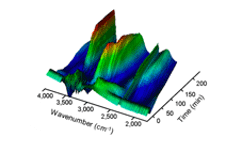
The scientists studied D. vulgaris because the bacterium, which is among a class of bacteria that reduce sulfate, plays a critical role in many important geochemical processes such as element and nutrient cycling in soils. It also assists in bioremediation and may someday be used to aid energy production and carbon sequestration efforts. ...
One of the biggest threats to today’s farmlands is the loss of soil organic carbon (SOC) and soil organic matter (SOM) from poor land-management practices. The presence of these materials is essential as they do everything from providing plants with proper nutrients to filtering harmful chemical compounds to the prevention of ...

The introduction of ecosystem services that are essential for life (soil fixation, nutrient cycles, carbon absorption, climate regulation, water supply, along with aesthetic, cultural and spiritual values) into market considerations would help to create a school of thought that is sensitive to conservation interests. ...