
Refine by
Activated Carbon Articles & Analysis
1,091 articles found

Both are regulated under the EPA’s Disinfectants and Disinfection Byproducts Rule. Powdered activated carbon (PAC) demand rises during bloom events. Customer complaints follow. ...
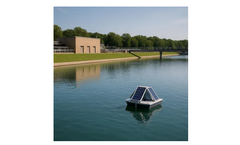
The study provides utilities with an independent, operations-focused reference for evaluating ultrasonic algae control.Study scope and independenceThe article presents a full-cycle field evaluation conducted by Central Alabama Water with an academic partner from the University of Alabama.It reports practical findings from an installed system in an active drinking-water basin, not ...
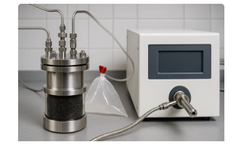
This study shifts focus from noble metals to low-cost, abundant elements by employing a Cu-Ni bimetal catalyst supported on coconut shell activated carbon for the aqueous-phase reforming of glycerol. The catalyst was synthesized by the wet impregnation method and characterized for surface morphology, surface functional groups, and surface area properties. ...
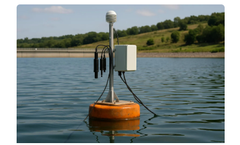
Operators see chlorophyll-a rise from 5 µg/L to 12 µg/L over 48 hours and act immediately—whether that means activating treatment, increasing monitoring frequency, or deploying source water controls. ...
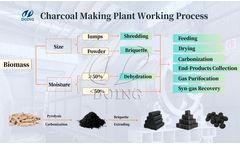
For biochar that improves soil, choose farming and forestry leftovers, like rice husks, crop stalks, and sawdust. For making activated carbon, the best choices are fruit shells-based raw materials, such as coconut shells, walnut shells, and apricot kernels. ...
Stage 2: Five-Bed RTO for High-Concentration CO and Organic Pollutant Destruction The Five-Bed Regenerative Thermal Oxidizer (RTO) is the core technology of the system.Operating continuously at temperatures above 850°C, the RTO provides a highly efficient thermal oxidation environment capable of destroying a wide range of pollutants.Carbon Monoxide (CO) Removal Carbon monoxide ...
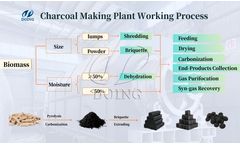
Biochar (High-Temperature Pyrolysis Carbonization) Biochar, however, is entirely different; it is a solid material rich in fixed carbon, obtained by subjecting biomass feedstock to high-temperature pyrolysis (carbonization) in an oxygen-deficient environment. ...

The optimal solution depends on airflow volume, VOC concentration, solvent composition, and operating requirements.Regenerative Thermal Oxidizer (RTO) RTO technology is widely recognized as one of the most effective solutions for printing exhaust gas treatment.The system oxidizes VOCs at temperatures typically ranging from 760°C to 980°C, converting harmful organic compounds into ...
Catalyst and Adsorbent Protection Certain organic compounds and paint-related contaminants may affect catalyst activity and adsorption performance over time if pretreatment is insufficient. 5. ...
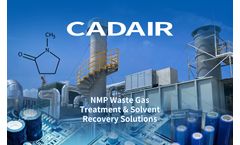
Core K-FILTER® Adsorption & Recovery System CADAIR’s flagship KF Recovery Unit adopts proprietaryK-FILTER® activated carbon fiber as the core medium, forming a complete set of standard recovery procedures for NMP waste gas. ...

Introduction Soldering operations in electronics manufacturing generate more than just visible smoke. When flux compounds are heated during soldering, they release volatile organic compounds (VOCs), resin vapors, odors, and fine airborne contaminants that can accumulate rapidly in enclosed workspaces. While particulate filters capture smoke particles, gaseous contaminants require a different ...
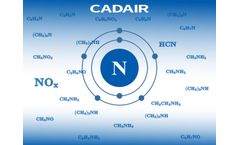
Nitrogen-containing organic waste gases are a common type of difficult-to-treat waste gas in industrial production, widely generated in industries such as carbon fiber, semiconductors, coal chemicals, pharmaceuticals, pesticides, and fine chemicals. ...
Introduction Soldering operations in electronics manufacturing generate fumes that contain flux vapors, fine particulate matter, and volatile organic compounds (VOCs). These fumes are released directly into the operator’s breathing zone and can quickly accumulate in enclosed workspaces if not controlled effectively. ...

A modern waste tyre recycling pyrolysis plant transforms end-of-life tyres into pyrolysis oil, recovered carbon black, combustible gas, and recyclable steel through thermochemical decomposition in oxygen-deficient conditions. ...
Introduction Soldering is a critical process in electronics manufacturing, PCB assembly, and repair operations. While the process itself appears relatively clean compared to heavy industrial applications, soldering generates airborne contaminants that can accumulate rapidly in enclosed workspaces. These fumes are primarily produced when flux compounds are heated during soldering and may contain ...
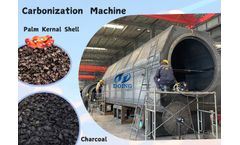
Instead of open burning or direct landfilling, this method transforms the waste into a stable, carbon-based product. Second, biochar creates additional value. It can be utilized in fields such as soil improvement, carbon sequestration, industrial fuel substitution, and adsorption for water treatment, transforming low-value waste into useful resources. ...
Best Solution for Large-Airflow, Low-Concentration VOC Exhaust Recommended Technology Combination For large airflow and low VOC concentration applications, the most widely adopted and cost-effective solution globally is:Adsorption Concentration + Thermal Oxidation Typical configurations include:Zeolite Rotor + RTO Zeolite Rotor + RCO Activated Carbon + ...
Our core technology utilizes the K-FILTER®, a high-performance activated carbon fiber (ACF) material. The technical origins of this material and its application date back to 1974. ...
Mechanisms of Biomass Carbonization A biochar machine for sale operates on the principle of thermal decomposition in an oxygen-limited environment. ...
Introduction Electronics manufacturing processes such as manual soldering, wave soldering, and rework operations generate fumes containing flux vapors, fine particulate matter, and volatile organic compounds (VOCs). Although soldering fumes may appear less intense than welding fumes, prolonged exposure in enclosed workspaces can significantly affect indoor air quality and operator health. ...