
Canopy Data Articles & Analysis
10 articles found
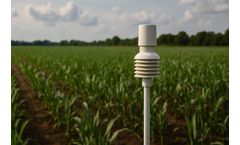
India Focus: Regulatory And Scheme Context For Humidity Monitoring PM-KUSUM: Solar-powered pump scheduling; weather and humidity data increasingly required for water audits. PMFBY Crop Insurance: Automated weather data, including humidity, mandated for weather-based claim validation. ...

Canopy analysis derives its usefulness from the vitality of the canopy. ...

In addition, it gives growers information about non-productive vines by analyzing gaps in the canopy. PureVine was designed with actionability in mind – we want our data products to help growers make better management decisions. ...
ByVineView

Now something else is helping inform the farmer’s touch: Data. Sensors, satellites and software are adding piles of new data to help manage water on the farm. ...
ByEnsia

We present results of the simulation obtained by using a modified version of the EULAG model which includes an energy balance equation to obtain the urban atmosphere/canopy energy exchange with the new 3D shadow model. The radiation model is coupled with the heat transfer equations from urban canopy model (UCM). The data produced by the urban ...

The first crop chosen to parameterize and test the new FAO AquaCrop model is maize (Zea mays L.). Working mainly with data sets from 6 yr of maize field experiments at Davis, CA, plus another 4 yr of Davis maize canopy data, a set of conservative (nearly constant) parameters of AquaCrop, presumably applicable to widely different conditions and ...
Ground-based active (self-illuminating) sensors make it possible to collect canopy data that are useful for making on-the-go N fertilizer application decisions. ...

Efficient use of real-time canopy sensors requires knowledge of the scale (resolution) of variation in the measured canopy property. ...
Efficient use of real-time canopy sensors requires knowledge of the scale (resolution) of variation in the measured canopy property. ...
Research was conducted during 2003–2005 to determine if reflectance of the peanut canopy, using multispectral imaging (350–2500 nm), could be used as an indicator of pod maturation. ...