
Refine by
Field Data Articles & Analysis
599 articles found
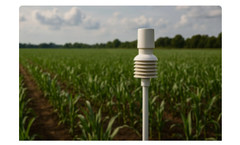
In agriculture, they are deployed at canopy height in open fields, integrated with greenhouse climate controls, or mounted on weather stations at field perimeters. ...

The FENCE Framework: Five Criteria for a Compliant Monitoring Program Fidelity of sensors to field conditions — demand field performance data in real operating environments; lab specifications often do not reflect field drift. ...
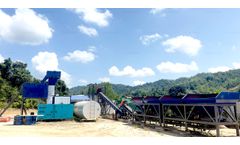
Verifying Cold Feed Dosing Specification Against Mix Compliance Requirements The verification standard that confirms compact asphalt drum mix plant cold feed dosing meets mix compliance requirements is field proportioning accuracy data from equivalent configurations under comparable aggregate moisture variability — not factory calibration records under ...
ByMacroad

But today, good fieldwork is only the beginning.A single environmental project can now produce soil results, groundwater data, field readings, laboratory reports, logger data, GIS layers, photographs, chain-of-custody records, regulatory standards, and compliance tables. ...
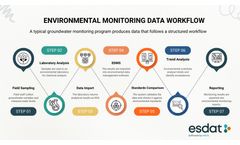
The full article, environmental data management systems, is the definitive version of this guide. It explains the skills environmental scientists need across the full data lifecycle, from field planning to compliance reporting. ...

The cost components of FK-1000-V3 and FK-600-V2, a typical ROI calculation for a five-megawatt PV plant, and how to pick the right model. Solar panel cleaning robot prices aren't usually published online — and there's a reason for that: every site is different, and the robot's cost is not just the machine's sticker price. In this article, drawing on Doka Engineering's 12+ years of field ...

The FENCE Framework: Five Criteria for a Compliant Monitoring Program Fidelity of sensors to field conditions — demand field performance data in real operating environments; lab specifications often do not reflect field drift. ...
The FENCE Framework: Five Criteria for a Compliant Monitoring Program Fidelity of sensors to field conditions — demand field performance data in real operating environments; lab specifications often do not reflect field drift. ...

Based on satellite monitoring and field data, the report indicates that the energy sector accounts for approximately 35% of global anthropogenic methane emissions.The report also estimates that nearly 30% of global methane emissions — more than 35 million tonnes annually — may be addressed using commercially available methane reduction technologies currently ...
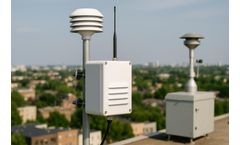
Indicative monitoring uses sensor-based networks to deliver near-real-time air quality data across multiple locations, enabling broader coverage and faster decision-making. ...

Here's a question that sounds simple but rarely gets a straight answer: what are lithium cells used for? Most articles give you a recycled list — "smartphones, laptops, EVs" — and call it a day. That's fine if you're writing a middle school science report. It's useless if you're an OEM engineer, a procurement manager, or a product developer trying to figure out which cell chemistry ...
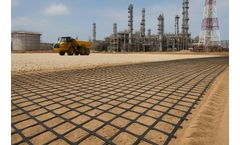
Role in Industrial, Aquaculture, and Marine Applications Industrial foundations: Reinforcement supports heavy equipment pads, storage tanks, and access roads by confining aggregate and mitigating differential settlement. Field data from comparable projects show reductions in base course thickness by 20 to 30% with biaxial reinforcement. ...
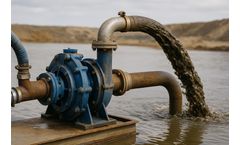
In pontoon dredging, the gap between test-based pump curves and field results is a common source of underperformance. The operating point is defined by the intersection of the pump curve and the system curve, which reflects the dredge layout, hose routing, elevations, and slurry characteristics—not brochure values alone. ...

Understanding the Plume Overestimation Problem A Problem Hidden in Plain Sight I have spent years watching site managers struggle with a problem they cannot easily see: their plume maps are wrong. These maps are not slightly wrong, but systematically wrong in ways that cost real money and extend project timelines unnecessarily. The contamination boundaries drawn on quarterly monitoring ...
ByLiORA
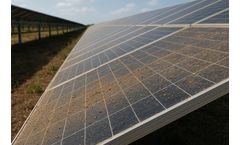
Even modest unexplained losses can cause a test to fail. Field data show that soiling losses of 1–2% can, when combined with normal measurement uncertainty, push a technically sound system outside acceptable performance limits, leading to delays, disputes among developers, EPCs, and asset owners, unplanned cleaning or retesting costs, and increased uncertainty ...
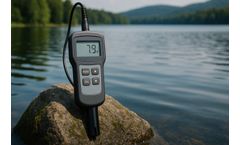
By logging data at regular intervals, they reveal daily cycles, rapid shifts, and seasonal trends. ...

Executive brief for Directors, Managers, and Compliance LeadsEnvironmental programs don't fail because dashboards are weak. They fail because field data, lab results, and reporting workflows don't align quickly enough to support decisions.For enterprise teams managing groundwater, soil, surface water, air, or multi-site monitoring, the most leverageable software ...
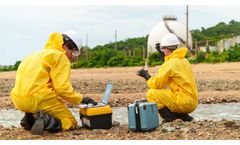
Environmental programs live or die on field execution, yet many organisations still rely on disconnected notes, spreadsheets, and after-the-fact data entry. The result is predictable: slow reporting cycles, preventable QA issues, inconsistent documentation, and limited visibility for managers who need oversight across multiple sites, contractors, and regulators. ...

Even within the EU, transporting a container holding 300–500 modules can vary by nearly twofold in cost depending on the route and country. Field data from multiple European PV decommissioning projects show that reverse logistics alone can account for 35–60% of total solar panel recycling costs, particularly in low-density solar farms and distributed ...

Modern land development, infrastructure, and remediation projects rely on two distinct but connected streams of information: engineering-focused ground data and environmental condition data. While both come from the same physical site, they serve very different decision-making purposes. ...