
Hydrocyclone Separation Articles & Analysis
10 articles found
Other plastics can be cleaned very effectively with hydrocyclone separators, but the high density of PET makes it difficult to float and thus separate using wet gravity methods. ...

Additionally, innovating advanced sorting at materials recovery facilities simplifies separation and directs greater volumes of plastics to proper reclamation channels. Equipment like optical sorters, ballistic separators, infrared spectroscopy and float-sink tanks leverage physical and chemical properties to isolate target plastics from waste streams. ...
ByAntecs
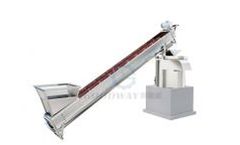
The sweet potato starch production process is actually a physical separation process, which separates the cellulose, protein, inorganic salts and other substances in the raw materials from the starch. ...

In this study, a multi-hydrocyclone classifier with a downstream cloth filter has been investigated on a pilot plant as a space-saving alternative with no need for a dosing of chemical additives. To improve the separation, a coarser ground PAC type was compared to a standard PAC type with regard to elimination results of OMP as well as separation ...

The coolant reservoir also can be modified to increase tramp oil separation, thus further enhancing the value of the skimmer. One system modification reduces water turbulence in the coolant reservoir and creates a quiet area where tramp oils can separate. Extending a piece of sheet metal across the tank or reservoir so coolant can flow under but not over the ...
In this study, the separation behaviors of particles in highway rainfall runoff using a Ø7.5 cm hydrocyclone were examined. The volume fraction and the total suspended solids concentrations in the overflow and underflow from the hydrocyclone were analyzed. The results indicated that the overflow volume fraction increased with increasing ...

The settled material (sand, flocculated particles and PAC) are pumped to a hydrocyclone. The sand is separated from the settled material and returned to the process while the sludge and PAC are sent to an intermediate tank which allows for PAC recovery and thickening of the sludge prior to leaving the system. ...

Abstract Solid/liquid separations are integral part of any wastewater treatment system. Particles heavier than water are commonly separated in sedimentation clarifiers. On the other hand, particles with densities lower than that of water are most often separated with flotation systems. This manuscript describes the development of hybrid ...
Entraining air into 100% of the wastestream and using a system of Hydrocyclone heads to separate the solids from the liquids in a centrifuge effect, the GEM System provides large, tight flocs that quickly rise to the top of th:e GEM System skimmer tank. ...
The soil-extractant mixture is continuously pumped out of the mixing tank, and the soil and extractant are separated using ...