
Refine by
Powder Activated Carbon Articles & Analysis
103 articles found

Both are regulated under the EPA’s Disinfectants and Disinfection Byproducts Rule. Powdered activated carbon (PAC) demand rises during bloom events. Customer complaints follow. ...

The study provides utilities with an independent, operations-focused reference for evaluating ultrasonic algae control.Study scope and independenceThe article presents a full-cycle field evaluation conducted by Central Alabama Water with an academic partner from the University of Alabama.It reports practical findings from an installed system in an active drinking-water basin, not ...
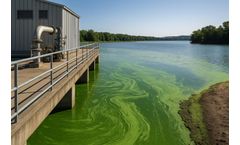
Real-world examples show measurable ROI for proactive source-water management.Treatment Plant ResponseWhen prevention is insufficient, treatment options include powdered activated carbon for taste/odor control and oxidation or advanced oxidation for toxin destruction, with chemical algaecides used only in emergencies; these can release toxins ...
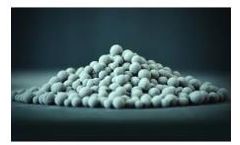
When engineers evaluate technologies for mercury remediation, discussions frequently focus on removal efficiency or binding strength. Laboratory studies often report sorption capacity and distribution coefficients (KD), which describe how much mercury a material can bind and how strongly it partitions from water onto the ...

Introduction Clean vs dirty water is more than a visual contrast. In water management, the difference determines whether households stay healthy, utilities meet compliance, and ecosystems avoid harmful algal blooms. We’ll explain the difference between clean and unclean water in practical terms, as well as outline key indicators, and connect those indicators to the European Drinking Water ...

Understand the sources, risks, and evolving technologies in the fight against forever chemicals in water treatment PFAS, better known colloquially as “forever chemicals” or “persistent organic pollutants” (POPs), stands for per- and polyfluoroalkyl substance(s). These chemicals contain multiple carbon-fluorine bonds, which are extremely strong and stable, allowing them to ...
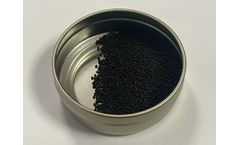
Did you know coconut shell activated carbon comes in 4 specialized forms to match industrial needs? Let’s decode their superpowers: Granular (GAC):Bestfor: Fixed-bed water filters & gas purificationWhy it wins: High durability, easy regeneration Powdered (PAC):Best for: Rapid contaminant removal in liquid-phase systemsWhy it wins: Ultra-fast ...

In contrast, unusually high DO can indicate increased algal activity and can serve as an early warning for algae blooms and related problems. ...

Geomembrane is a new type of anti-seepage material, and it can be installed and used in all kinds of environmental treatment projects, such as landfills, tailings treatment, wastewater treatment, and other projects. The anti-seepage geomembrane is made of 100% HDPE resin and anti-UV additives. Geomembrane has a long service life, low construction cost and good anti-seepage performance, easy to ...
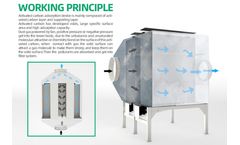
Shapes include granular, crushed, powder, fibrous and molded (honeycomb). The surface of activated carbon is basically hydrophobic. ...

This operation is carried out by injecting a quantity of lime, limestone slurry, active carbon powder or sodium bicarbonate powder proportional to the pollutant concentrations (dioxins, furans, heavy metals, acids). ...
ByENVEA

Water treatment technologies that can remove PFAS include granular activated carbon (GAC), powdered activated carbon (PAC), ion exchange, and membrane processes like reverse osmosis (RO) and nanofiltration. Carbon filtration is most commonly used for PFAS treatment at the moment, but membrane ...
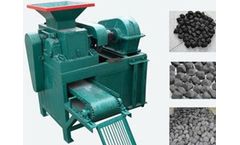
The BBQ charcoal machine mainly used for pressing powder materials. It is characterized by high molding pressure, the number of revolutions of the main engine is adjustable, and it equipped with a screw feeding device. ...
The multi-step process for the treatment of the highly acidic wastewater was designed to remove wastewater constituents as purely as possible from the wastewater. 1st stage: Separation of coal dust and activated carbon powder The acidic wastewater is filtered through a membrane filter press. ...

Better raw water quality results in significant treatment savings and a fast pay-back. Topics: raw water, cyanobacteria, cyanotoxins, taste and odor, treatment savings, improve fishery, water clarity Reservoir Overview: This lake is an 850+ acre manmade reservoir feeding a County operated water treatment plant (WTP) in Georgia. The WTP production capacity was ten (10) to twelve (12) million ...

Whether you buy a bottle of water or turn on the faucet at home for a drink, the last thing you want to worry about is that it might be contaminated with bacteria or toxic chemicals. In developed countries and cities that have advanced drinking water treatment facilities set up, they have methods for dealing with those harmful pollutants. It’s the same with bottled water companies. For ...
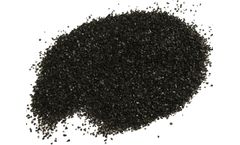
To answer that question, let’s break things down from the very beginning. What is Activated Carbon? In a super simplified explanation, activated carbon is either powdered charcoal or coal. ...

Based on input from the refinery and the designer, the system provides the capability to infuse powdered activated carbon for possible future use in the aeration zone. ...

An analysis comparing the effectiveness of this nanocatalyst with that of conventional catalysts was summarized in a paper by Schoubye and Jensen of Haldor Topsoe A/S: "The catalyst particles are micro-porous, and, due to their small size, they catalyze the gas-phase reactions without diffusion restriction (i.e., almost 100% utilization of the catalyst's intrinsic \activity), as ...
Constituents of concern included atrazine, viruses, turbidity, total organic carbon (TOC), and bromate. Each of these constituents had a potential significant impact on possible treatment processes. ...