
Refine by
Sensor Data Articles & Analysis
659 articles found
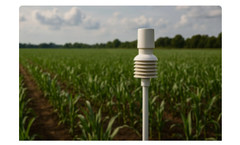
IoT-Enabled Digital Humidity Sensors: integrate sensing with wireless connectivity (LoRaWAN, 4G, NB-IoT) for real-time data transmission to centralized dashboards, essential for large-scale deployments. ...
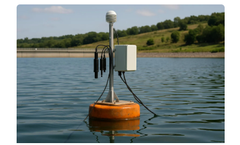
Unlike grab sampling, which involves a site visit, sample collection, and lab analysis, real-time systems employ in-situ sensors that measure conditions every 15 minutes to one hour and report data via cellular or satellite connection. ...

The FENCE Framework: Five Criteria for a Compliant Monitoring Program Fidelity of sensors to field conditions — demand field performance data in real operating environments; lab specifications often do not reflect field drift. ...
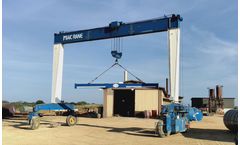
Variable Frequency Drives (VFDs) VFDs control the speed of electric motors in RTG cranes.They are used for:Gantry travel motorsHoisting motorsTrolley movement systems Benefits of VFD integration:Smooth acceleration and decelerationEnergy efficiencyReduced mechanical stressPrecise speed control The PLC sends speed commands to VFDs, ensuring coordinated motion control.5. Sensors ...
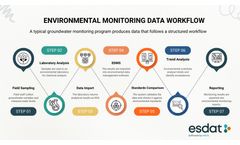
The full article, environmental data management systems, is the definitive version of this guide. It explains the skills environmental scientists need across the full data lifecycle, from field planning to compliance reporting. ...

The Interstate Technology and Regulatory Council published its Vapor Intrusion Toolkit in January 2026. The Toolkit consolidates three earlier ITRC documents into one resource: the 2007 VI-1 guidance, the 2014 PVI-1 petroleum guidance, and the 2021 VIM-1 mitigation ...
ByLiORA

The FENCE Framework: Five Criteria for a Compliant Monitoring Program Fidelity of sensors to field conditions — demand field performance data in real operating environments; lab specifications often do not reflect field drift. ...
The FENCE Framework: Five Criteria for a Compliant Monitoring Program Fidelity of sensors to field conditions — demand field performance data in real operating environments; lab specifications often do not reflect field drift. ...
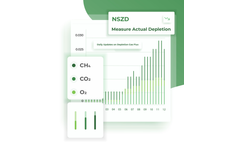
Effective resource allocation and enhancement to operational efficiency. With only 6 sensors and LiORA Insights there was dramatic acceleration in decision-making processes with sensor data and analytics to showcase: Bioremediation injection effectiveness NSZD rates quantified for transition decision Vapor intrusion protection maintained ...
ByLiORA

The National Park Rapid Plume Assessment showcases the efficiency of LiORA Trends real-time modeling, utilizing 8 sensors to deliver critical insights in a fraction of the time. Get insights on your plume immediately rather than years or ...
ByLiORA

Achieved significant savings through innovative data collection and depletion rate monitoring with advanced sensor technology and real-time analytics. The project resulted in $748,680 in savings through the deployment of 17 sensors, collecting 23 million data points to monitor a 4,490 L/year depletion ...
ByLiORA

This case study highlights significant savings from risk-based closure strategies, achieving $400,000 in sampling costs with the deployment of 16 sensors + LiORA Insights over just two ...
ByLiORA
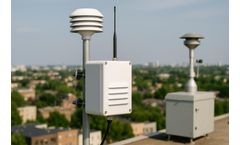
Indicative monitoring uses sensor-based networks to deliver near-real-time air quality data across multiple locations, enabling broader coverage and faster decision-making. ...

Learn more at picvisa.com/data-analytics-in-waste-management. How Data Analytics Transforms Waste Management Modern recycling centers use IoT sensors, machine learning, and Big Data analytics to capture, process, and act on vast amounts of data. ...
An optical sorter uses high-resolution cameras, near-infrared (NIR) sensors, and image processing algorithms to identify and differentiate materials in a mixed stream on a conveyor belt. ...
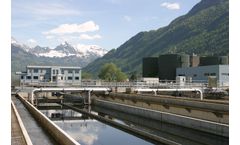
Advanced monitoring and control systems, including sensors, automation, and data analytics, allow operators to optimize performance and identify issues early. ...
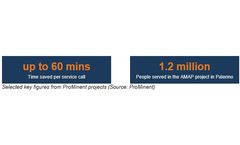
However, what is crucial is not merely data collection, but the ability to derive reliable decision-making bases for operation and maintenance from this data. ...
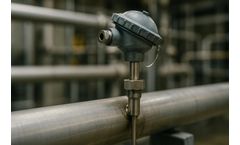
A perfectly calibrated sensor is only as good as its installation. In industrial environments such as refineries, power plants, and chemical reactors, how a sensor is fitted determines whether it measures accurately, lasts as expected, and maintains safe operations. ...
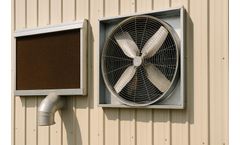
When this does not occur, issues such as the following may arise: thermal stratification dead zones localized air currents Under these conditions, air is not distributed effectively and the system loses efficiency, even if the overall airflow rate is correctly sized. 3. Incorrect sensor placement The effectiveness of the control system depends on the quality of the ...

Organizations face a storm of challenges: the strain of product demand, limited supply chain resources, and an unprecedented exodus of people leaving the workforce. Thankfully, Industry 4.0 technology and systems provide some ...