
Refine by
Spectrometry Articles & Analysis
1,192 articles found
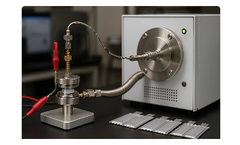
Differential Electrochemical Mass Spectrometry combines in situ electrochemical testing with real-time gas analysis to reveal electrolyte decomposition and interfacial reactions by monitoring gas evolution such as hydrogen, carbon dioxide, carbon monoxide, oxygen, hydrogen sulfide, and sulfur dioxide.Case studies and supporting evidenceSustainable cathode and Ta-modification ...
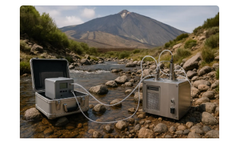
Hiden Analytical's quadrupole mass spectrometry platforms enable these complementary measurements, with sampling via application-specific interfaces including membrane inlet probes where applicable. For dissolved-gas workflows, membrane inlet mass spectrometry (MIMS) enables direct sampling of dissolved gases and volatile compounds from bulk liquid through a ...
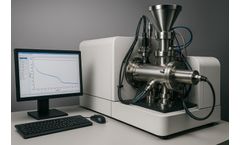
Secondary Ion Mass Spectrometry (SIMS) is a surface analysis technique known for high sensitivity and excellent depth resolution in the analysis of solid materials. ...
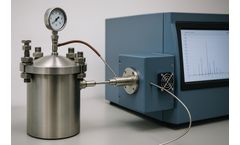
A recent case study within the Biocycle-UA II program demonstrates how gas-phase mass spectrometry can illuminate depolymerization kinetics during the melt hydrolysis of biopolymers. ...
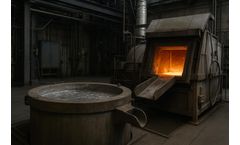
Quality Assurance and Testing Spectrometric Analysis Lead quality control relies on ppm-level impurity analysis via optical emission spectrometry (OES), X-ray fluorescence (XRF), and inductively coupled plasma (ICP): OES: 2-3 minutes per sample; detection 1-10 ppm; routine QC and final certification. ...

Operando differential electrochemical mass spectrometry (DEMS) measurements, using a Hiden HPR-40 DEMS in a Type A cell, elucidate reaction pathways during ethanol oxidation in alkaline media. ...
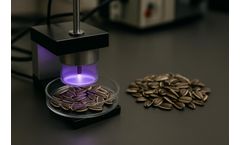
Electrical measurements and optical emission spectroscopy assessed discharge homogeneity and excited species in the plasma phase.Stable reactive species generated during operation were identified using quadrupole mass spectrometry with a Hiden Analytical HPR-20 system configured in residual gas analyser mode with electron impact ionisation at 70 eV. ...
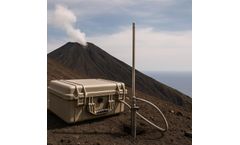
Stromboli Island hosts one of the world’s most monitored volcanoes, equipped with a comprehensive multi-parameter surveillance system for 24/7 monitoring, early warning of eruptions, and detection of slope failures with potential tsunami generation. Real-time, high-frequency gas measurements enable detection of subtle shifts in CO2 flux and gas ratios that may reflect magma ascent, ...
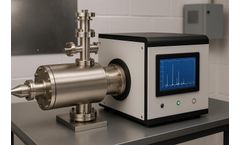
Frequently Asked Questions What is Dual Zone mass spectrometry? Dual Zone mass spectrometry combines two operating modes within a single mass spectrometer. ...
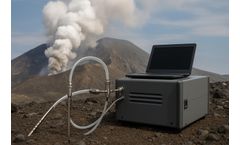
For researchers and monitoring teams, rapid, reliable compositional data are essential to understand degassing behaviour, interpret magmatic and hydrothermal processes, and support hazard assessment workflows.Mass spectrometry enables real-time volcanic gas analysis with high sensitivity and multi-species detection. ...

In particular, co-aromatization of methane with furan is proposed to facilitate methane activation and raise aromatics selectivity, with limited oxygen in furan aiding oxidative cleaning of carbonaceous deposits and potentially improving long-term stability.Experimental approachThe study employed solid-state nuclear magnetic resonance spectroscopy in combination with online mass ...
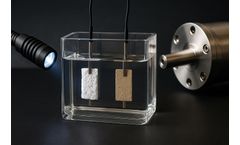
By comparing amorphous and rutile TiO2, the work demonstrates how structural order and electronic properties influence charge transfer and the formation of key reaction intermediates during nitrate conversion.The synergistic effect of illumination and applied potential enables nitrate reduction under mild conditions, with amorphous TiO2 displaying superior activity due to a higher density of ...

When reactions generate subtle or short-lived species, mass spectrometry (MS) provides the analytical power to capture and interpret them. ...
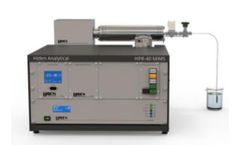
Dissolved gas measurements are often the difference between suspecting what’s happening in a water system and proving it. Whether you’re tracing and dating groundwater, diagnosing denitrification, quantifying methane production, or monitoring trace contaminants, the challenge is the same: gas concentrations can be low, dynamic, and easily altered by sampling. We sat down with ...

In support of next-generation fusion diagnostics, Oak Ridge National Laboratory has evaluated Hiden’s high-resolution quadrupole RGA approach for the ITER Diagnostic Residual Gas Analyser (DRGA), focusing on fast, selective measurement of light species in exhaust streams. The study shows how enhanced-resolution quadrupole operation can deconvolve closely spaced masses—most notably ...

Fast Dissolved Gas Analysis for Groundwater Age, Recharge and Flow Paths Mass spectrometry for groundwater studies provides real-time detection of transient events and supports reliable, efficient groundwater quality monitoring to help ensure the safety and sustainability of water supplies. ...
Vaporisation thermodynamic studies were performed over <ZrAl3(cr)+ZrAl2(cr)> and <ZrAl2(cr)+Zr2Al3(cr)> biphasic region of Al-Zr system by employing Knudsen Effusion Mass Spectrometry (KEMS) in the temperature range between 1233 to 1535 and 1208 to 1458 K, respectively. ...
Temperature Programmed Reduction (TPR) with quadrupole mass spectrometry (MS) addresses a long-standing challenge in catalyst characterisation: the inability to distinguish between hydrogen consumption mechanisms during reduction. ...
Materials often owe their performance to subtle differences between surface sites, yet these variations are not always easy to distinguish experimentally. As temperature changes, molecules bound to a surface respond in ways that reflect how and where they are attached. Temperature programmed desorption uses controlled heating to trigger such responses in a systematic way. When evolved gas ...

Temperature programmed oxidation (TPO) is a controlled characterisation technique that probes catalyst deactivation by oxidatively removing activity-limiting species. When coupled with mass spectrometry (MS), TPO directly links catalyst deactivation mechanisms to measurable gas-phase products, enabling informed decisions on catalyst design, operation, and regeneration ...