
Refine by
Biodegradation Software
10 software items found
by:Environmental Software Online, LLC/Groundwater Software based inGroton, MASSACHUSETTS (USA)
The RBCA Tier 2 Analyzer utilizes a innovative analytical flow solution for fast and easy modeling of complex groundwater flow systems, it provides a rigorous treatment of the many complex reactions and processes involved with the biodegradation of contaminated groundwater. These two features make it the ideal software package for applications including: Simulating natural ...

by:Hydromantis Environmental Software Solutions, Inc. based inHamilton, ONTARIO (CANADA)
Advanced Features: An unmatched number of unit processes to build comprehensive process layouts. State-of-the-art models to simulate different volatilization, adsorption and biodegradation mechanisms. New pH dependent volatilization models to evaluate the effects of pH on air emissions. Customizable mass transfer properties to more accurately evaluate variations in process ...
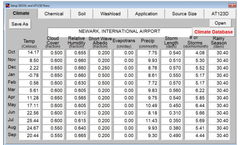
by:Environmental Software Consultants, LLC . (ESCI) based inMadison, WISCONSIN (USA)
SESOILisa one-dimensional vertical transport model for the unsaturated (vadose) zone that simulates contaminant transport based on diffusion, adsorption, volatilization, biodegradation. cation exchange and hydrolysis. SESOIL is an acronym for the Seasonal Soil compartment model. It contains three sub-models that simultaneously simulate contaminant transport, soil water movement ...
by:S.S. Papadopulos & Associates, Inc based inRockville, MARYLAND (USA)
BIOSCREEN-AT is a screening-level model developed for and distributed by the EPA that simulates remediation through natural attenuation of dissolved hydrocarbons at petroleum fuel release ...
by:Environmental Software Online, LLC/Groundwater Software based inGroton, MASSACHUSETTS (USA)
MODFLOW-SURFACT™ is a powerful 3D finite-difference flow and transport modeling code that offers substantial advancements over public-domain versions of MODFLOW. For example, MODFLOW-SURFACT™ addresses rewetting of drained cell, handling of pumping wells, solute transport problems, numerical dispersion and oscillations, and impacts of transient flow storage effects on transport. ...

by:EarthShift Global LLC based inKittery, MAINE (USA)
In Packaging Design, Small Decision. Can Have Big Environmental Consequences. Making the right choices is easier with PackageSmart – the most powerful and convenient packaging Life Cycle Assessment (LCA) software. Some aspects of sustainable packaging are required by regulators while others are decisions made by each packager. The criteria for ranking and comparing packaging based on ...

by:GSI Environmental Inc. based inHouston, TEXAS (USA)
BIOSCREEN is a screening model which simulates remediation through natural attenuation of dissolved hydrocarbons at petroleum fuel release sites. This software was written in the Microsoft Excel environment for the U.S. Environmental Protection ...
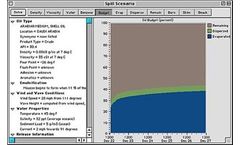
by:NOAA Office of Response and Restoration based inSilver Spring, MARYLAND (USA)
ADIOS (Automated Data Inquiry for Oil Spills) is NOAA's oil weathering model. It's an oil spill response tool that models how different types of oil weather (undergo physical and chemical changes) in the marine environment. Working from a database of more than a thousand different crude oils and refined products, ADIOS quickly estimates the expected characteristics and behavior of spilled ...
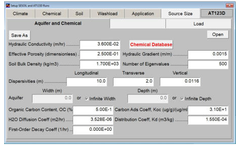
by:Environmental Software Consultants, LLC . (ESCI) based inMadison, WISCONSIN (USA)
AT123D is a generalized three-dimensional groundwater transport and fate model. AT123D is an acronym for Analytical Transient 1-, 2-, and 3-Dimensional Simulation of Waste Transport in the Aquifer System. It simulates contaminant transport under one-dimensional groundwater flow. Transport and fate processes simulated include advection, dispersion, diffusion, adsorption, and biological decay. ...
by:GSI Environmental Inc. based inHouston, TEXAS (USA)
The mass balance paradigm is an important new approach to evaluating Monitored Natural Attenuation (MNA) at chlorinated solvent sites. By using the mass balance approach, site managers can demonstrate that the assimilative capacity of a particular system is either capable (or incapable) of managing the mass flux of chlorinated solvents emitted from a source zone. In addition, a detailed mass ...