
Refine by
Biodegradation Training Courses
6 training items found

Premium
Manufactured by:BUCHI based inFlawil, SWITZERLAND
Modifying particle size in a laboratory spray-dryer setup can be quite challenging, especially if particles with larger diameter are requested. Altering process and formulation parameters with the most significant impact on particle size is not obvious but can negatively affect product characteristics such as residual moisture or ...

by:SWACHHA ECO SOLUTIONS based inBangalore, INDIA
All employees will undergo extensive training in SWM, including the linkage between a deteriorating environment, waste, and human health, the treatment and management of waste, principles behind composting and recycling, occupational hazards, health and hygiene, collection and transportation procedures. Segregation of Waste at Source ,Collection,Composting of ...

by:Environmental Research and Education Foundation (EREF) based inRaleigh, NORTH CAROLINA (USA)
The major biodegradable components of municipal solid waste include paper, food waste and yard waste. All of these materials contain cellulose, hemicellulose and lignin, with cellulose and hemicellulose responsible for most of the methane produced in landfills. ...
by:Northwest Environmental Training Center (NWETC) based inIssaquah, WASHINGTON (USA)
This two-day course includes an overview of key chemistry concepts associated with environmental contamination and provides a foundation for understanding contaminant fate and ...
by:Hydroisotop GmbH based inSchweitenkirchen, GERMANY
Hydroisotop offers a variety of professional training programs as well as work experience / internship for pupils and students. We host a variety of workshops for our clients to inform about isotope ...
by:Northwest Environmental Training Center (NWETC) based inIssaquah, WASHINGTON (USA)
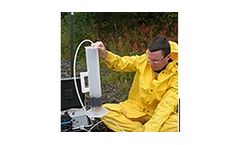
This course provides an overview of the vapor intrusion exposure pathway including its scientific foundation, regulatory framework, and the technical aspects of investigating and remediating contaminated vapor sites. The class will cover topics such as: screening sites for potential vapor intrusion concerns, conducting field investigations, sampling techniques, data analyses, exposure point ...