
Refine by
Combustion Temperature Software
6 software items found
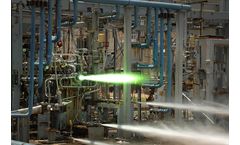
by:SimFlow based inWarsaw, POLAND
Among many potential applications, SimFlow capabilities can be used to: Estimate efficiency of chemical reactors, Model spray phenomena and coal combustion, Predict pollutant emissions from various combustion systems. Temperature field and spatio-temporal species concentrations calculated in such analyses may bring an engineer closer to the ...
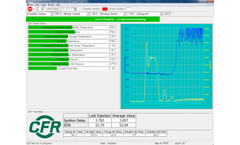
Manufactured by:CFR Engines Canada ULC based inOttawa, ONTARIO (CANADA)
These upgrades are designed specifically for advanced testing environments, providing researchers with the ability to implement long ignition delays, unusual test conditions, and flexible test designs. A key feature of the upgrades is the upgraded software, which allows users to easily vary critical combustion parameters such as temperatures and pressures. These ...
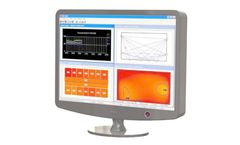
Manufactured by:SEI Europe Technologie SRL based inLondon, UNITED KINGDOM
The system operates on the principal that the speed of sound in a gas is proportional to the temperature of that ...

by:ci-Tec GmbH based inKarlsruhe, GERMANY
Process-control optimization with camera-based characteristic. inspect pro control C acquires and analyzes image data obtained from high performance infrared cameras in cement rotary-kiln systems. The so ware preprocesses image data and calculates characteristic parameters of the combustion behavior. On this basis, process control is adapted to optimize operations. inspect pro control C transfers ...
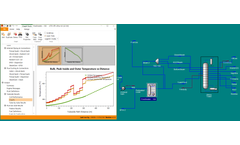
by:Heat Transfer Research, Inc. based inNavasota, TEXAS (USA)
Xfh Ultra, HTRI’s general-purpose fired heater modeling software, provides calculations for refinery operations. Users can easily explore operating scenarios to increase capacity and performance, helping to minimize energy loss and shutdown ...

Manufactured by:HH Engineering & Service GmbH based inSonnefeld, GERMANY
The SCR method is intended to control the NOx emissions by means of a selective catalytic reduction. The SCR method is intended to control the NOx emissions by means of a selective catalytic reduction. This is the most common method for removal of NOx in combustion engines and non-engine combustion processes (biomass, glass furnace, SNCR-SCR combination, industrial ...